
The sprouting process is wonderful because it predigests the nutrients of the seed, making them easier to draw in a metabolize in your body.
One quick caveat for people who might not be able to eat sprouts. If you are "cold" in nature, for example you are frail, often feel cold, and have a tendency to loose stools, you should not eat sprouts unless they have been lightly cooked. If you notice a worsening of the above symptoms, then remove sprouts from your diet.
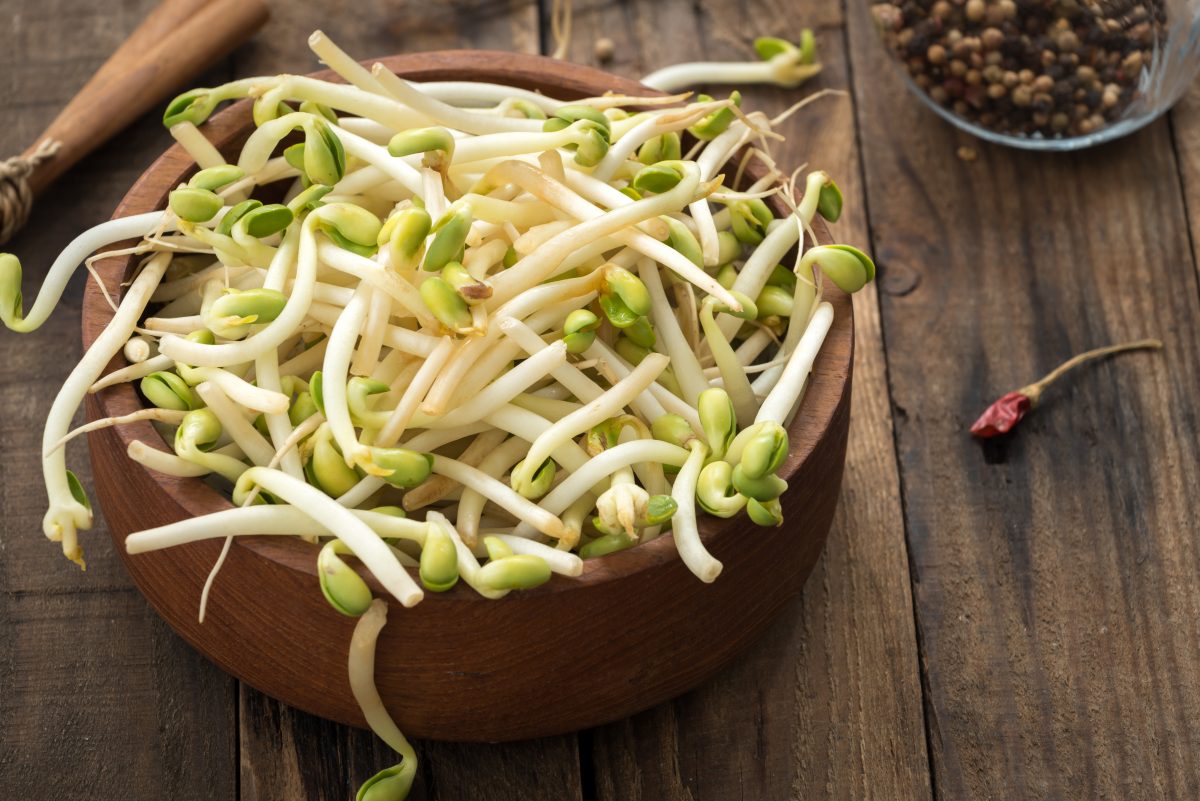
Soybean sprouts
Sprouts are a great remedy for stagnant liver qi and blood, and to prevent the problem. Symptoms of stagnant liver qi and blood include swellings and lumps, depression, frustration, a swollen abdomen and chest, a purplish or dark tongue, and a greenish complexion.
The sprouting process is wonderful because it predigests the nutrients of the seed, making them easier to draw in a metabolize in your body.
One quick caveat for people who might not be able to eat sprouts. If you are "cold" in nature, for example you are frail, often feel cold, and have a tendency to loose stools, you should not eat sprouts unless they have been lightly cooked. If you notice a worsening of the above symptoms, then remove sprouts from your diet.
Sprouts are a great remedy for stagnant liver qi and blood, and to prevent the problem. Symptoms of stagnant liver qi and blood include swellings and lumps, depression, frustration, a swollen abdomen and chest, a purplish or dark tongue, and a greenish complexion.
How to make sprouts
Paul Pitchford's method is an easy one to follow. Here are the steps he recommends. (See Bibliography)
- Use one part seeds to at least three parts water. For example, use 1/4 alfalfa seeds to 3/4 cup or more of water.
- Soak the seeds and water in a wide-mouth jar.
- The measurements below yield one quart of ready to eat sprouts.
- Cover the mouth of the jar with a plastic or stainless steel sprouting screen or cheesecloth, which is tied on or secured with a rubber band.
- After soaking the seeds, drain well and keep in a warm (65 degrees Fahrenheit) dark place. Cover with a cloth or bag. Sprouting time increases with more light and cooler conditions.
- Rinse twice a day, ideally morning and evening. If making soybean sprouts, rinse 4 times daily, or they may rot. Put the sprouts in a drainer and rinse thoroughly. Rinse out the jar and replace the sprouts.
- After three days, place alfalfa, red clover, radish, and mustard sprouts in a cool place with indirect sunlight to boost chlorophyll production. Continue rinsing twice daily until you see 1-3 inch greens on the sprouts.
- To remove the loose hulls from sprouts, place them in a large bowl of water and agitate them. Gently reach under the sprouts and lift them out of the water, without disturbing the sunken hulls. Discard the hulls. Sprouts will keep refrigerated up to one week in a plastic bag or covered glass jar, with a wet piece of paper towel enclosed.
Seed | Soak time | Days to sprout |
|---|---|---|
2 tablespoons alfalfa or red clover | 6 hours | 5-6 days |
1/4 cup radish or mustard seeds | 6 hours | 5-6 days |
1/2 cup lentils or fenugreek | 8 hours | 3 days |
1 cup garbanzos, soy, or other legumes | 12 hours | 3 days |
2 cups sunflower seeds | 12 hours | 2 days |