Labradorite often draws people in during times of mental fog, emotional fatigue, or transition. Its shifting light feels protective and steady, especially when life feels overstimulating or unclear.
In Traditional Chinese Medicine, those experiences often reflect disrupted Qi flow or an unsettled Shen (spirit). Labradorite in TCM aligns with practices that support energetic protection, clarity, and balance, helping people feel more grounded, focused, and resilient.
This article explores how labradorite fits within TCM principles and why many turn to it for emotional steadiness, clearer thinking, and support during change.
If you only have 30 seconds, start here
-
Use: Work with labradorite through direct physical contact. Wear it as a pendant, hold it in the hands, or apply it to the body rather than using it symbolically.
-
Place: Place labradorite on the lower back or lower abdomen to support grounding, depletion after stress, or long-term fatigue. For anxiety or nervous strain, hold or tape small stones at the inner wrist points associated with the Heart and Pericardium.
-
Work with: Hold labradorite when feeling withdrawn, depleted, or emotionally shut down. It is used when people feel worn down over time, anxious, or less comfortable engaging with others.
-
Cleanse: Cleanse labradorite in running water or with hematite. Allow rest between uses so the stone can reset before continued contact.
If this speaks to what you’re experiencing, continue reading to learn why labradorite is applied this way and how stone medicine understands its effects.
Key Takeaways
-
Labradorite in TCM connects with energetic protection, clarity, and balance, especially during periods of stress, transition, or mental overload.
-
From a TCM perspective, labradorite supports smoother Qi flow and a steadier Shen, which many associate with calmer thoughts, emotional resilience, and clearer focus.
-
People often turn to labradorite when they feel scattered, drained by external influences, or emotionally unsettled rather than physically ill.
-
Within TCM-informed wellness practices, labradorite complements approaches that support Kidney and Liver energy, particularly during change or fatigue.
-
Modern use of labradorite blends traditional energetic principles with accessible practices such as meditation, daily rituals, and mindful placement.
Understanding Labradorite’s Place in Traditional Chinese Medicine

The Energetic Properties of Labradorite in TCM
In Traditional Chinese Medicine, health depends on the smooth movement of Qi and the steadiness of the Shen, or spirit. When life feels overwhelming, people often describe symptoms such as mental fog, nervous tension, or emotional fatigue. From a TCM perspective, those experiences frequently reflect disrupted energy flow rather than a single physical imbalance.
Labradorite aligns with practices that emphasize protection and regulation. Its energetic quality supports steadiness rather than stimulation, helping the system feel more contained, grounded, and clear. Many associate this quality with maintaining focus and resilience when external demands feel draining.
Historical Context of Stones in TCM
While herbs and acupuncture form the core of Traditional Chinese Medicine, practitioners have long observed the energetic qualities of minerals and stones. Jade remains the most documented example, valued for its stabilizing and protective nature. However, the broader principle extends beyond any single stone.
TCM recognizes that natural materials carry distinct energetic signatures. Stones enter this framework not as cures, but as supportive tools that influence how the body and spirit respond to stress, emotion, and environment.
A TCM Perspective on Labradorite
Within a TCM-informed lens, labradorite aligns most closely with Water element themes and Kidney energy. These relate to endurance, boundaries, and the ability to adapt during change. Labradorite supports people who feel depleted, overstimulated, or unsettled rather than physically ill.
By encouraging energetic protection and clarity, labradorite complements practices aimed at restoring balance between mental focus, emotional steadiness, and inner resilience. This makes it especially relevant during periods of transition, uncertainty, or sustained stress.
Labradorite is often described as working in conversation with the body’s natural rhythms, gently supporting clarity, emotional ease, and inner awareness—more like keeping time than setting the pace.
The Therapeutic Applications of Labradorite in TCM
Within a TCM-informed approach, labradorite supports how the body adapts to stress, fatigue, and emotional overload rather than addressing a single condition. Its role centers on steadiness, protection, and clarity, especially when the nervous system feels taxed or energy feels scattered.
Balancing Qi and Blood with Labradorite
In Traditional Chinese Medicine, smooth Qi and Blood flow supports mental clarity, emotional steadiness, and physical resilience. When that flow feels disrupted, people often notice symptoms such as fatigue, tension, poor focus, or a sense of being ungrounded.
Labradorite supports balance by encouraging steadiness rather than stimulation. Within a TCM-informed framework, it aligns with practices that help Qi settle and move more smoothly, especially during periods of stress or transition. This quality makes it appealing when energy feels scattered or depleted rather than blocked in one specific area.
Rather than acting directly on Blood circulation, labradorite complements approaches that calm the system as a whole. As Qi steadies, Blood flow often follows more naturally, supporting a greater sense of balance, clarity, and ease.
Supporting Organ Systems Through Gemstone Therapy
Traditional Chinese Medicine views organ systems as functional networks that influence physical health, emotional patterns, and mental clarity. When these systems feel strained, people often notice fatigue, irritability, difficulty concentrating, or feeling depleted after stress.
-
Kidney energy (primary): Labradorite most often aligns with Kidney energy, which relates to endurance, boundaries, and the ability to adapt during change. People drawn to this stone frequently describe fatigue, nervous system overload, or a sense of being worn down over time. Labradorite supports steadiness during these periods rather than pushing the body to do more.
-
Liver energy (secondary): Labradorite also offers gentle secondary support to Liver energy by encouraging smoother Qi movement. When stress leads to tension, frustration, or mental tightness, this quality supports a more settled internal rhythm without overstimulation.
If you’d like to explore this further, our free Chinese Medicine Concepts video lessons offer a easy-to-follow, informed way to learn how the organ systems work to support balance and resilience.
Emotional and Spiritual Well-being with Labradorite
Traditional Chinese Medicine recognizes that emotional strain and prolonged stress affect the body just as clearly as physical symptoms. People often describe feeling overwhelmed, mentally scattered, emotionally guarded, or disconnected from their inner sense of direction.
Within a TCM-informed framework, labradorite aligns with practices that support a steadier Shen, or spirit. Rather than amplifying emotion, it encourages containment and clarity, which many associate with improved focus, emotional resilience, and a stronger sense of internal stability.
Labradorite also resonates with themes of protection and transition. During periods of change, it supports the ability to remain present without becoming overstimulated, helping people feel more grounded, centered, and emotionally balanced over time.
The shifting light within labradorite mirrors the way our inner landscape changes over time. Its movement and depth offer a gentle metaphor for growth, transition, and renewal.
To explore emotions and balance through TCM, watch The Root Source of Your Emotions or visit our Emotional Healing & Inner Resilience video collection.

Integrating Labradorite into Modern Wellness Practices
Labradorite fits easily into everyday wellness routines that support clarity, resilience, and emotional balance. Rather than requiring specialized knowledge, it complements simple practices that help people feel more grounded, focused, and steady through daily stress and change.
Practical Uses of Labradorite for Daily Health
Labradorite integrates easily into daily routines that support focus, emotional steadiness, and recovery from mental overload. Many people choose simple, consistent uses rather than elaborate rituals.
Here are a few ways to use labradorite in TCM daily:
-
Wear for daily support: Wearing labradorite as a pendant or bracelet keeps it close throughout the day and may support a steadier, less reactive response to busy or demanding environments.
-
Place in key spaces: Keeping labradorite near a workspace can support concentration, while placing it by the bed may encourage mental unwinding and rest at night.
-
Use for intention-setting: Holding the stone briefly in the morning or evening offers a simple way to pause, reflect, and reconnect with clarity and direction.
Combining Labradorite with Acupuncture and Herbalism
Labradorite can complement established TCM practices by supporting steadiness and clarity during treatment and recovery. Rather than replacing acupuncture or herbal formulas, it fits alongside them as a supportive element within a broader care approach.
Some practitioners or individuals place labradorite near the body or within the treatment space during acupuncture sessions to reinforce a sense of calm, protection, and focus as Qi responds to needling. This use emphasizes containment and regulation rather than stimulation.
When working with herbal formulas that support stress regulation, endurance, or recovery, labradorite may help maintain energetic balance, particularly during periods of transition or fatigue. Between treatments, continued use can support integration, allowing the body to absorb change without feeling overwhelmed.
This approach reflects Traditional Chinese Medicine’s emphasis on supporting the whole system rather than isolating a single symptom.
Mindfulness and Meditation with Labradorite in TCM
Mindfulness and meditation offer a natural way to work with labradorite’s steady, reflective quality. Many people use the stone during quiet moments to support focus, emotional balance, and a sense of inner grounding.
Holding labradorite during meditation can help anchor attention, especially when the mind feels busy or scattered. Its shifting light often serves as a visual reminder to stay present, encouraging awareness without forcing stillness.
Within a TCM-informed perspective, this practice supports a calmer Shen and a smoother internal rhythm. Over time, pairing meditation with labradorite may help people feel more centered, resilient, and connected to their inner sense of clarity.
Like a quiet doorway between outer attention and inner awareness, labradorite’s shifting light invites the mind to settle and turn inward, supporting deeper presence during meditation.
The Science Behind Labradorite in TCM
Traditional Chinese Medicine approaches health through observation, pattern recognition, and lived experience rather than laboratory proof alone. When viewed through this lens, labradorite’s effects relate less to chemical action and more to how rhythm, resonance, and perception influence the body’s internal balance.
Vibrational Frequencies and Their TCM Equivalents
Traditional Chinese Medicine does not describe the body in terms of vibration or frequency, yet it closely observes rhythm, resonance, and responsiveness. Concepts such as Qi movement, Yin–Yang balance, and organ harmony reflect how the body responds to internal and external influence over time.
In modern language, people often describe stones like labradorite as having a vibrational quality. From a TCM-informed perspective, this idea aligns more closely with resonance than measurement. Labradorite’s steady, reflective presence mirrors practices that help the body recalibrate when mental strain, emotional stress, or sensory overload disrupt internal rhythm.
Rather than forcing change, this approach emphasizes alignment. When the system settles into a steadier rhythm, clarity and balance often follow naturally.
The Role of Minerals in Energetic Healing
Minerals form slowly under pressure, time, and shifting conditions, and labradorite reflects that process in both structure and appearance. Its layered composition and changing light often resonate with people who feel mentally overloaded, emotionally guarded, or stretched thin by constant demands.
From a TCM-informed perspective, labradorite’s value lies less in stimulation and more in regulation. People often describe feeling more contained, focused, or less reactive when working with it, especially during periods of stress or transition. In Western terms, this aligns with supporting nervous system steadiness and improved stress tolerance.
Rather than energizing or sedating, labradorite encourages balance. Its reflective quality mirrors practices that help the body pause, reset, and respond more intentionally, which supports resilience over time.
Modern Research on Gemstone Therapy
Modern research does not yet study gemstones through a Traditional Chinese Medicine framework, but it does explore how material properties such as density, structure, and sensory interaction influence the nervous system. These factors help explain why certain stones feel grounding, calming, or stabilizing rather than stimulating.
From a Western perspective, stones form under immense pressure over long periods of time, resulting in dense, steady structures that interact slowly with the body. This quality aligns with how labradorite is often used to support stress regulation, emotional steadiness, and resilience rather than quick or targeted symptom relief.
Rather than acting through chemical mechanisms, gemstone therapy works through perception, presence, and subtle sensory feedback. This understanding helps bridge modern observations of nervous system regulation with traditional stone-based healing practices.
Like tuning an instrument rather than playing the music for it, gemstone work is often described as helping the body return to its own natural pitch. When a stone feels supportive, it may encourage steadiness and coherence, allowing the body’s inherent capacity for balance to work alongside other forms of care.
Choosing and Caring for Your Labradorite for TCM Use
In stone-based Chinese medicine, how a stone forms, holds density, and responds to light matters just as much as how it looks. Labradorite forms under pressure over long periods of time, giving it a steady, anchoring quality that aligns well with practices focused on protection, resilience, and nervous system regulation.
Because stones interact slowly and deeply, care matters. Cleansing and charging are not about making a stone “work harder,” but about keeping its presence clear, responsive, and supportive over time.
Identifying Quality Labradorite for Therapeutic Purposes
When selecting labradorite for TCM-informed use, visual clarity, structural integrity, and sensory response matter more than size or polish. In stone medicine, how a stone interacts with light and how it feels in the hand often offer meaningful clues about its suitability.
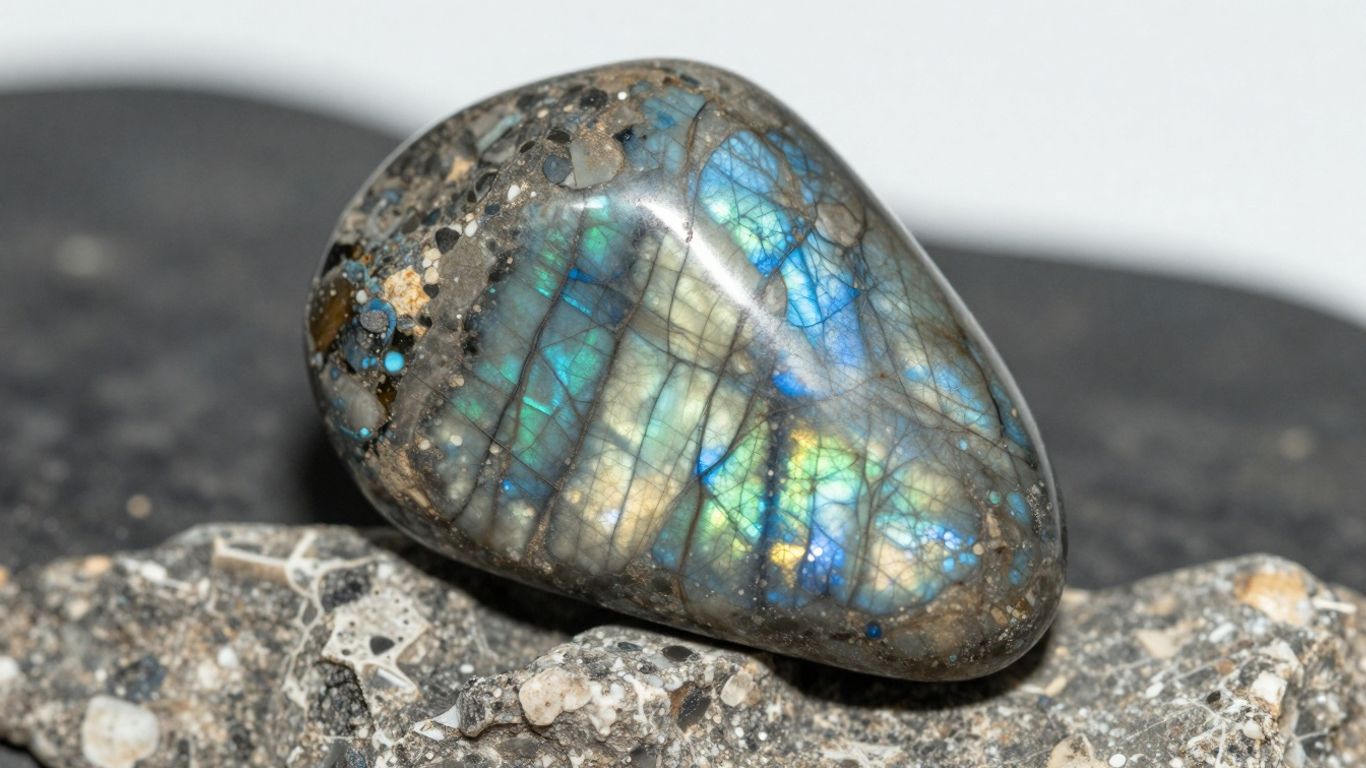
Labradorite’s defining feature is labradorescence—the shifting play of light across its surface. Stones with clear, responsive flashes tend to feel more engaging and supportive, especially when used for clarity, protection, or emotional steadiness. Just as important, the stone should feel comfortable and balanced when held, without sharp edges or visual heaviness.
Key qualities to look for:
-
Color Flash: Look for blue, green, or gold flashes that appear clearly as the stone moves. A responsive, shifting light is more important than brightness alone.
-
Clarity of Light: While labradorite itself is often opaque, the flash should appear clean and defined rather than dull or cloudy.
-
Structural Integrity: Natural inclusions are common and acceptable, but avoid stones with deep cracks or fractures that may compromise stability over time.
-
Form and Feel: Smooth, tumbled stones are often easiest to work with, especially for placement on the body or use during meditation.
This approach emphasizes responsiveness and balance rather than perfection, aligning with the way stones are traditionally selected within Chinese stone medicine practices.
Cleansing and Charging Your Gemstone
Cleansing supports labradorite’s ability to remain clear, responsive, and supportive over time. From a stone medicine perspective, this process helps release accumulated environmental or emotional residue rather than intensifying the stone’s effect.
-
Water Cleansing: Gently rinse labradorite under cool running water to refresh its surface and reset its energetic presence. Avoid salt water, as it can damage the stone over time.
-
Smudging: Pass labradorite through the smoke of sage, palo santo, or other cleansing herbs to clear heaviness and restore openness.
-
Sunlight or Moonlight: Place the stone in sunlight or moonlight for a few hours. Sunlight offers a brighter, more activating quality, while moonlight supports calm and restoration.
-
Earth Burial: Bury labradorite in the earth overnight or for a full day to reconnect it with grounding, stabilizing forces.
Regular cleansing, especially before first use and after periods of heavy use, helps labradorite remain clear, receptive, and supportive.
Ethical Sourcing of Labradorite
In TCM-informed stone work, how a stone is sourced matters as much as how it is used. Ethical sourcing supports not only environmental care but also the human systems involved in mining, processing, and distribution.
When possible, choose labradorite from suppliers who practice transparency around origin and labor conditions. Stones sourced with care tend to carry fewer layers of disruption, making them easier to work with in practices focused on clarity, balance, and resilience.
Approaching stone selection with awareness reflects the broader Chinese medicine principle that health arises from harmony—within the body, within communities, and within our relationship to the natural world.
Wrapping It Up
Labradorite in TCM offers a way to think about protection, clarity, and balance that feels both ancient and relevant. Rather than acting as a remedy, it supports how the body and spirit respond to stress, transition, and emotional overload.
Whether used alongside Traditional Chinese Medicine practices or as part of a simple daily routine, labradorite invites steadiness, awareness, and resilience. Approached with care and intention, it becomes less about the stone itself and more about cultivating a clearer, more balanced relationship with your own inner rhythms.
Explore More TCM Healing Crystals
To explore more stones through a Traditional Chinese Medicine lens, visit the TCM Healing Crystals Index, where you’ll find an alphabetical guide and thematic groupings to support deeper learning.
Frequently Asked Questions
What does labradorite support physically and emotionally in Traditional Chinese Medicine?
In a TCM-informed context, labradorite supports resilience during stress, mental fatigue, and emotional overwhelm. Physically, it aligns with steadiness and recovery when energy feels depleted. Emotionally, it supports clarity, boundaries, and a calmer response to change rather than targeting a specific symptom.
Is labradorite meant to treat symptoms?
No. Labradorite does not act as a treatment. Instead, it complements practices that help the body regulate stress, steady the nervous system, and maintain emotional resilience.
Which organ systems does labradorite relate to in TCM?
Labradorite most closely aligns with Kidney energy, which relates to endurance, boundaries, and resilience over time. It may also gently support Liver energy by encouraging smoother internal flow during stress.
How do people usually work with labradorite?
Many people wear it, place it in a workspace or resting area, or use it during meditation or quiet reflection. Simple, consistent use often feels more supportive than elaborate rituals.
Do I need to believe in TCM for labradorite to be helpful?
Not at all. Some people connect through Traditional Chinese Medicine concepts, while others relate through nervous system awareness, stress support, or personal experience. Curiosity is enough.
Can labradorite replace medical care?
No. Labradorite is best used alongside acupuncture, herbs, and other TCM approaches as part of a broader care plan.
Sources & TCM Foundations
The insights in this article draw from Traditional Chinese Medicine mineral teachings, classical stone lore, and modern interpretations of crystal healing. Core references include:
-
Franks, Stone Medicine: A Chinese Medical Guide to Healing with Gems and Minerals
-
Yu & Foster, Chinese Mineral Medicine
-
Gienger & Maier, Healing Stones
-
Jing Wang, Chinese Medical Mineralogy
This work is also informed by lived study, clinical observation, and practitioner engagement with stone medicine traditions.